
Will I Miss It Again?
A Scene I’ve Seen Before

Before the iPhone, there were PDAs, BlackBerry devices, and Windows Mobile phones. They could access the internet and run software. At the time, I looked at their tiny screens and awkward interfaces and thought, It’s still too early.
Then, in 2007, the iPhone popularized direct touch and reset expectations for how a smartphone should work. A year later, Apple launched the App Store, and the market entered an entirely different phase. More than 10 million apps were downloaded in its first three days.
Looking back, what I missed was not the iPhone itself. I missed the moment when cameras, location data, and mobile internet began producing entirely new kinds of services—when a single device started turning into a platform for whole new industries.
I only accepted that shift after smartphones had become mainstream. I moved after the outcome was already clear.
Lately, when I look at smart glasses, I keep thinking about that time.
A War Already Underway
Smart glasses have gone through years of trial and error since Google Glass. But recently, the direction of the industry has begun to converge.
Meta has partnered with Ray-Ban and Oakley, while Google has joined forces with Gentle Monster and Warby Parker. Google has emphasized that glasses only become truly useful when people actually want to wear them all day.
In 2026, the market is beginning to separate into audio-first glasses and display glasses. The priority is becoming clearer: before adding more technology, companies first have to make glasses that people genuinely want to wear.
Then comes the next battle.
Smart glasses are not yet mainstream, but the race to control the software layer on top of them has already begun.
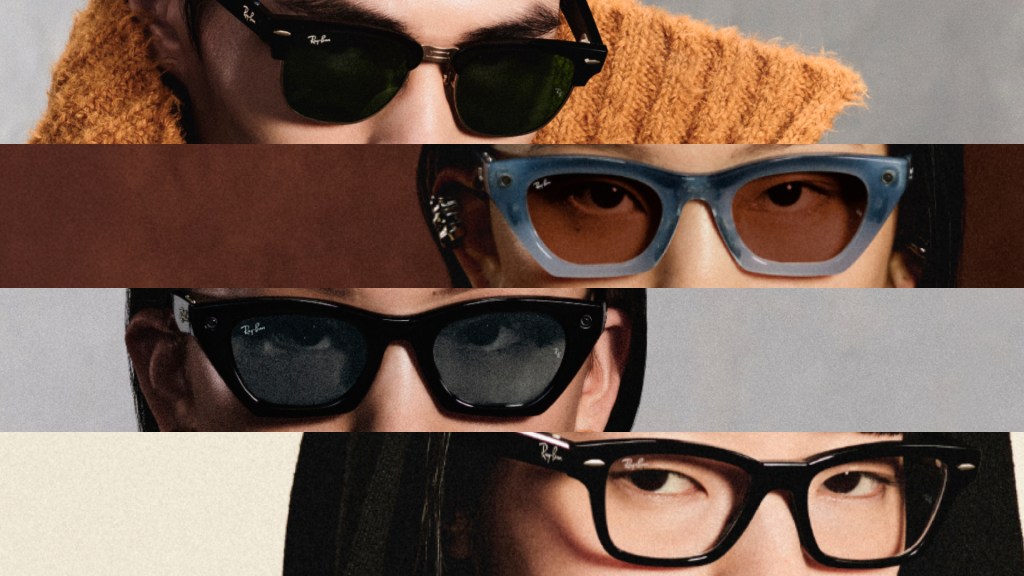
Meta is allowing developers to extend existing mobile apps to its glasses, while also opening the door to services that run directly on Ray-Ban Display using familiar web technologies such as HTML, CSS, and JavaScript. It is also beginning to create ways for users to discover and add new experiences.
Google is using Android XR to connect headsets and multiple types of glasses within a common development environment. Snap is building its own operating system and development ecosystem.
There is a reason these companies are moving early. They have already seen what the App Store did to the smartphone industry.
The App Store was not simply an accessory that arrived after smartphones became successful.
It was one of the forces that turned the smartphone into a platform in the first place.
The lesson is clear: you do not wait until the hardware has conquered the market before building an ecosystem. You start attracting the people who will create new services as soon as the possibility of a platform becomes visible.
Last time, I noticed the platform after the product had already succeeded.
This time, I am watching the platform take shape before the product has fully arrived.
After Touch
There is also one variable that did not exist in the smartphone era.
The AI agent.
One of the greatest advantages of smart glasses is simple: both hands are free. If I still have to pull out a device, stare at a screen, find an app, and tap through menus with my fingers, much of the reason for wearing glasses disappears.
Smartphones ushered in an era built around touch. Smart glasses point toward something different: I express my intent through speech and gaze, and AI finds and executes the service I need.

In 2026, Meta announced plans to bring its personal AI agent, Muse, to AI glasses. The idea is to let users manage schedules, complete tasks, and even work toward longer-term goals without using their hands. Meta is also testing ways for AI to carry out actions inside web-based services in response to a user’s request.
What matters is that AI agents may not remain just another feature inside smart glasses.
If the same AI can understand what a person wants across phones, cars, TVs, robots, and other devices, the AI agent becomes more than an app. It becomes a common interface between people and machines.
PCs had keyboards and mice. Smartphones had our fingers.
Smart glasses are trying to free even those hands.
AI agents are beginning to fill that gap.
This Time, I Won’t Wait
.jpg/1920px-Elon_Musk_(33377877458).jpg?utm_source=commons.wikimedia.org&utm_campaign=index&utm_content=thumbnail&_=20250713224312)
The real potential of smart glasses lies elsewhere: in creating a new way to access information and services at the very moment we are looking at the physical world. Who will define that experience is still an open question.
When the iPhone first appeared, there was no Uber, Instagram, or TikTok. Many of the reasons we now find smartphones indispensable were created only after the device itself had arrived.
So this time, I do not want to sit back and ask only, Will smart glasses succeed?
I want to watch who attracts the people capable of creating new services. I want to see how apps and the web change when they move onto glasses, and how AI agents begin connecting the physical world with digital services.
I do not know whether smart glasses will become the next major computing platform. I do not know whether the glasses we see today will resemble their final form.
But I have already lived through one technological shift that I recognized only after the outcome was obvious.
Once everything is certain, everyone can see it.
What I missed last time was the period just before that certainty.
This time, I do not intend to let that moment pass unnoticed.

NIN Spot can be used for free at any location for 24 hours.
Want to keep your memories longer? Preserve them on NIN.Earth.
NIN.Earth is building the internet layer for a world seen through Smart glasses.
Comments